Tony G arrived at the World Series of Poker in 2003 with a Lithuanian accent, a bankroll, and a conviction that poker tables had been far too polite for far too long. By the time he left Las Vegas that summer, he had become the most talked-about player the game had seen in years, not for his cards but for his mouth.
Antanas Guoga was born in Vilnius in 1975. He was not born into poker. He was born into mathematics and business. He studied and later built telecommunications ventures across Eastern Europe. These were the wild years after the Soviet collapse, when fortunes moved fast and the rules were still being written. Guoga made his money and moved it around.
When he discovered poker in the late 1990s, he did not approach it like a grinder learning the game. He approached it like a man who had already won at bigger games. Poker was not his career. It was his theater.
The Trash-Talk Doctrine
What made Tony G different was not his cards but his understanding of psychology at the table. Poker was, at that time, a game of quiet. Players studied position. They counted pot odds. They folded hands silently. The best players were often the quiet ones.
Tony G argued, via his actions if not his words, that this was all wrong. A table is a social space. A table is where people reveal things. If you could talk, you could influence. You could tilt your opponents. You could bend the table dynamics in your favor.
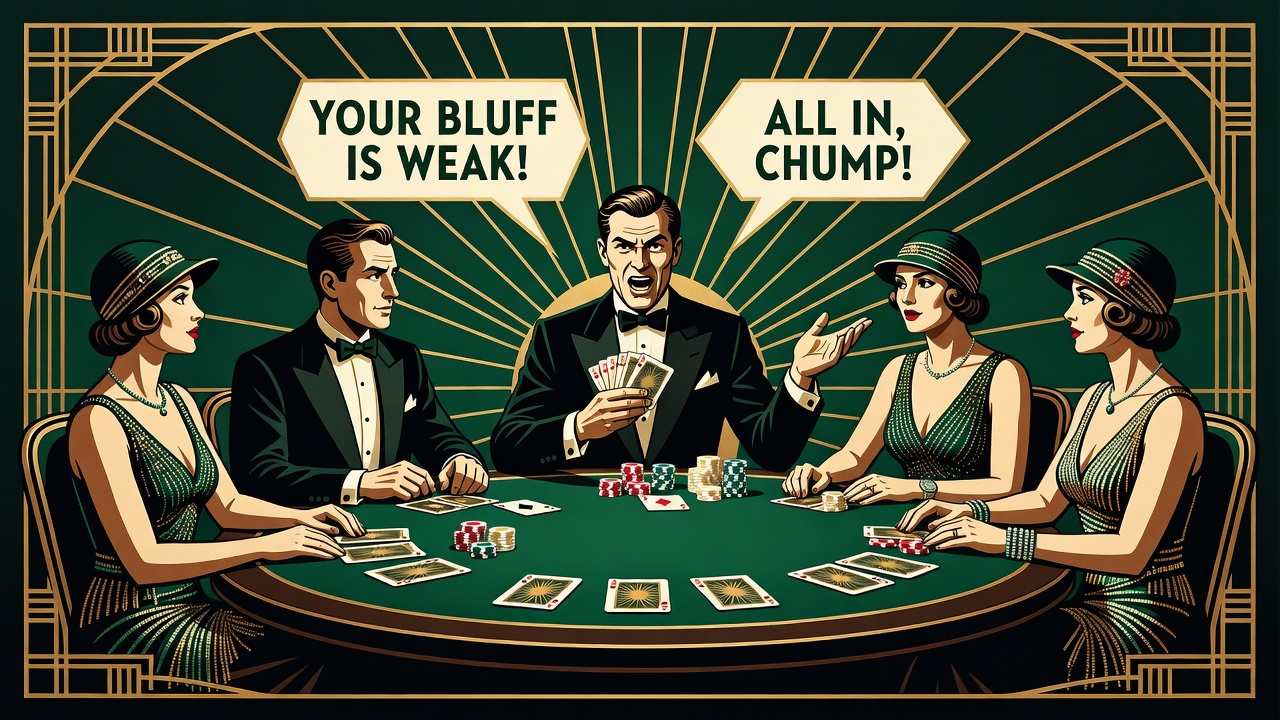
He would sit down at a table and immediately begin. He would narrate his opponents' thinking. He would mock his own decisions. He would question the universe. He would do all of this not in anger but in service of a clear goal: get people to play worse.
When opponents got frustrated, they played looser. When they got excited, they took more risks. When they got defensive, they made mistakes. Tony G was not a savage. He was a systems thinker. He had simply identified the exploit: most poker players are not emotionally trained. They can be influenced.
The Player
Tony G was not a bad poker player. He was a good one. He understood position and ranges. He knew when to fold and when to gamble. But his genius was in combining solid poker with table dynamics.
At the 2003 World Series, he made a deep run. He was loud. He was funny. He was occasionally outrageous. The other players had no framework for it. They were used to granite-faced grinders and quiet mathematicians. They did not know how to play against someone who was enjoying himself so visibly.
He would sit with a huge stack and announce it. "I have got so much money, I do not even know what to do with it." True or false, it affected the table. Players who feel short-stacked play tighter. Players who feel outmatched play worse. Tony G was engineering these emotional states.
The Persona Question
What makes a persona real? This was the question that hung over Tony G from the beginning. Was he putting on an act, or was this actually how he was?
The answer is that it did not matter. Real or performance, the effects were the same. His opponents had to decide how to play against him. And most of them decided poorly. They got emotional. They made it personal. They tried to punish him instead of making good decisions.
A truly elite player would have smiled and played tight poker, letting Tony G's aggression punish itself. Very few did. Most reacted. Most tilted. Most lost.
The Broadcasting Angle
Tony G understood something else that was ahead of its time: poker on television needed characters. Granite-faced grinders sitting in silence makes for bad television. A man animating a table makes for compelling viewing.
The major poker networks began featuring Tony G. ESPN gave him air time. They cut to his table because something was always happening. He was not the best poker player in every tournament. He was just the most interesting.
This led to sponsorships. This led to a personal brand. He became one of the few poker players that casual viewers could name. They might not remember Negreanu or Brunson, but they knew Tony G. The guy who talked.
The Later Years
Tony G eventually moved into politics in Lithuania. He served as a Member of the European Parliament. He started a cryptocurrency venture. He diversified.
But his impact on poker remained. He showed that the game could be played differently. That table dynamics mattered as much as card knowledge. That personality was not a liability but an asset.
Today, when poker broadcasts feature animated commentary and table banter, they are following a path that Tony G laid down. He made it acceptable to enjoy the game. To have fun. To be loud about it. The modern poker table is less quiet than it was before Tony G sat down.