Underground poker rooms have a specific ecosystem. A house takes 5 percent. A floor person watches. A dealer deals. There's a social structure, hierarchy, and unspoken rules. This infrastructure costs money but creates trust.
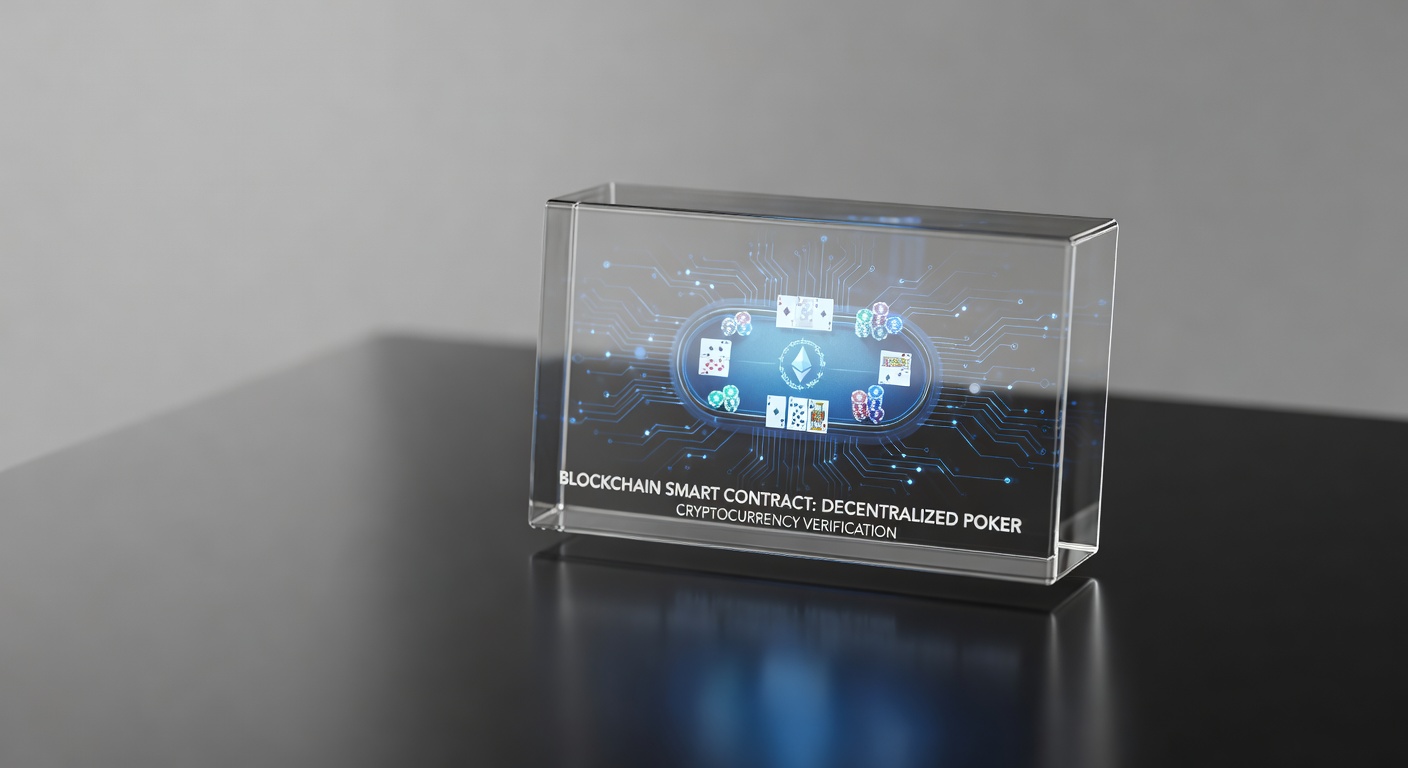
Blockchain poker promises to eliminate the house cut. A smart contract replaces the dealer. Players deposit crypto, the contract manages the game, everyone withdraws their portion. No house, no cut, no middleman.
I've been in underground rooms in Manila, Moscow, and three cities I won't name. I've watched players trust operators through nothing but reputation. I've seen that trust violated. The question about blockchain poker is: does automation create trust, or does it just make betrayal impersonal?
How Blockchain Poker Works
A smart contract is code running on a blockchain. Ethereum is the standard. The contract:
- Accepts player deposits
- Runs game logic (card dealing via a certified RNG)
- Calculates winners
- Distributes payouts
No human dealer. No house rake. Just code.
PartyPoker and a few others tried this around 2018. The technical barrier was immense. Ethereum couldn't handle the transaction volume. Fees were high. Latency was bad. The experience was worse than traditional poker.
Now, layer-2 solutions like Arbitrum and Polygon have fixed some of that. Poker Bravo runs on Polygon. Dustforce runs on Arbitrum. The infrastructure is actually usable now.
The Trust Question
Underneath the tech is a trust question: do you trust code more than you trust people?
In an underground room, you trust the operator's reputation. You observe their behavior. You ask other players. You get a sense of whether they're taking money. With blockchain, you trust the code. The code is public. Anyone can audit it.
But code audit is not trivial. You need software engineers to review it. You need them to understand Solidity. You need them to spot security holes. Most players can't do that.
So instead, you're trusting the auditors who reviewed the code. You're trusting the auditing firm's reputation.
It's still trust, just displaced.
The RNG Problem
A critical issue: random number generation on-chain.
Blockchain is deterministic. Code produces the same output given the same input. This is fine for most applications. For randomness, it's a problem.
Poker needs unpredictable outcomes. If your RNG is predictable, someone can exploit it. Underground rooms solve this through physical shuffling. A human dealer randomizes the deck.
Blockchain poker uses oracles: external services that feed randomness into the smart contract. Chainlink is the standard. But oracles are a trust layer. If the oracle is compromised, the game is compromised.
So again, you're replacing human trust with oracle trust.
The Liquidity Problem
Undertaking poker rooms need liquidity. You need enough players and enough money for games to run.
Blockchain poker apps have struggled to build liquidity. Players don't want to deposit crypto. They want to play poker. The barrier to entry (buy crypto, learn wallets) is too high for casual players.
Pokerbravo and Dustforce have tiny player pools. Six-handed games are hard to find. Full ring games rarer. Cash game liquidity has never materialized.
Tournaments are easier because liquidity pools for a specific time. But even tournament fields are small.
The Regulatory Problem
Undeterground rooms operate outside regulation because they don't touch fiat currency (usually). Blockchain poker is different.
If a blockchain poker app accepts fiat deposits, accepts payouts in fiat, they're operating as a money services business. UKGC, MGA, everyone asks: who's the licensee?
The answer is complicated because a smart contract isn't a person. Who holds the licenses? The team that deployed it? The crypto exchange that handles conversion? Regulators haven't decided. This ambiguity means blockchain poker is unregulated, which is a risk for players.
Fiat-to-crypto conversions are regulated. The poker part is not.
Why It Matters
Blockchain removes the house rake. For serious players, that's theoretically attractive. Lower rake means lower expected losses.
But the cost of entry (crypto knowledge, wallet setup, oracle trust, regulatory ambiguity) is high. And the liquidity is low. You can't move value through a thin market easily.
Underneath all the differences, poker is still a zero-sum game. One player's win is another's loss. Blockchain doesn't change the math. It changes the mechanism.
I spent years in rooms where reputation was currency. I knew the operators. I watched their behavior. Trust was earned.
Blockchain poker replaces that with code trust. Code doesn't lie, but code also doesn't have skin in the game. The operator of a blockchain poker app can vanish. The code remains, but your money might not.
The better solution would be: a licensed operator using blockchain for settlement. Someone the UKGC or MGA vouches for, running their game on a transparent smart contract.
We're not there yet. Until we are, blockchain poker is interesting technically but risky practically.