I remember the Boardwalk in 1983. The Resorts International had just opened. I was seventeen. The carpet smelled like cigarette smoke and spilled cocktails. The slot machines rang like a thousand church bells at once. There was a dealer at every table, a real person in a real chair, handling real cards. That was how casinos worked. You went there. You sat down. You played with people.
Then everything changed. Online casinos became legal in certain jurisdictions. The games became digital. Players could sit at home and play against a computer. But something was lost. The human element. The table tension. The read on the dealer's face.
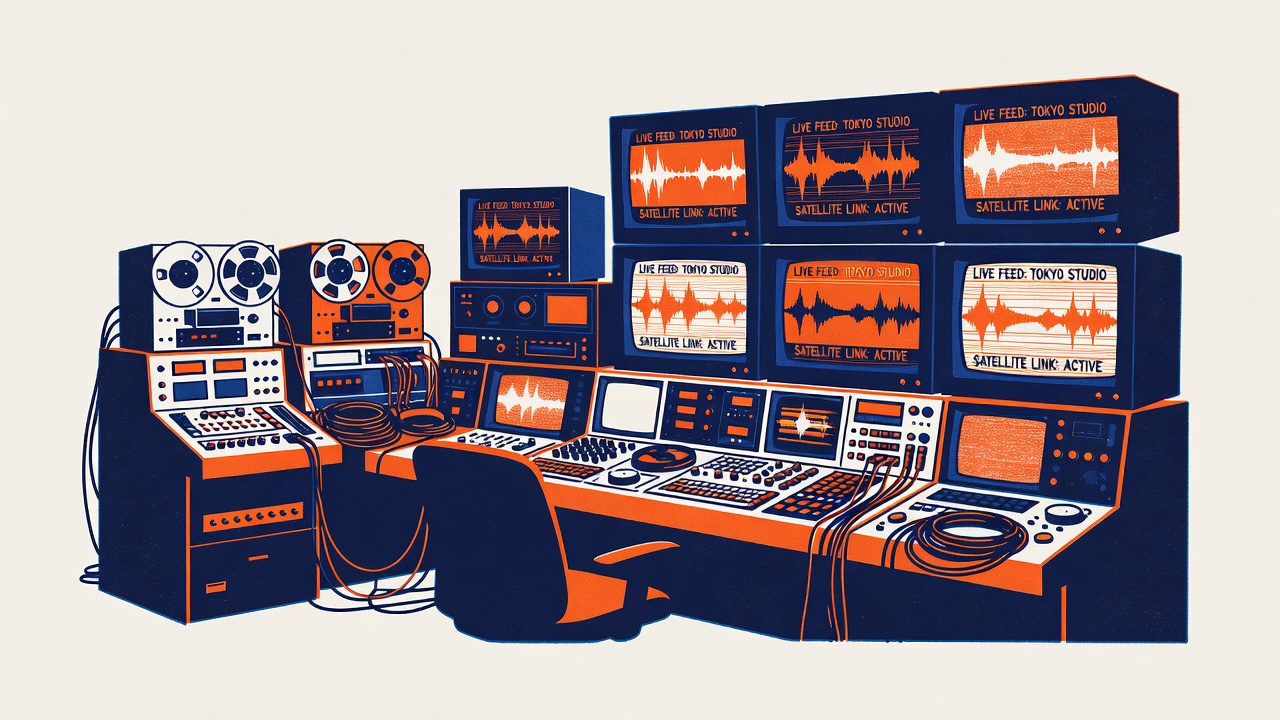
Live dealer games fixed that problem. They are real people sitting at real tables, dealing real cards, filmed with multiple cameras and broadcast over the internet to players at home. It sounds simple. It is not simple. It is genuinely complicated infrastructure.
The Technical Architecture
The setup requires several components working simultaneously. First, there is the live studio itself. This is a room, usually somewhere in Europe or Asia, where tables are set up. There is professional lighting, usually aimed at the table and the dealer's face. There are multiple cameras at each table, typically five to seven, positioned to show the action from different angles. One camera shows the dealer's face. One shows the cards being dealt. One shows the entire table. One shows the monitor display for the player betting interface. All of this is happening simultaneously.
Second, there is the broadcast infrastructure. The video stream is encoded, compressed, and sent through the internet to thousands of players simultaneously. This requires serious bandwidth and serious server infrastructure. A single live table can have hundreds of players connected at once, all watching the same feed, all placing bets in real-time.
Third, there is the betting interface. Players see a display that shows the table odds, the cards, the available betting options, and a countdown timer for when betting closes. This is computer-generated graphics overlaid on the live video feed. Players click buttons to place bets. These bets are recorded in the casino's database instantly.
Fourth, there is the game logic. The cards dealt are real, but the card values are read by the computer using optical recognition software. When the dealer places down cards, the camera detects the cards, identifies them, and the computer records the result. The player's bet is calculated, winnings are awarded, and the next round begins.
A live dealer game is not a game played by a computer pretending to be human. It is a game played by a human, with a computer watching.
The advantage is authenticity. You are not playing against a random number generator, or at least not in the traditional sense. You are watching a real shuffling process, real cards, real dealing. The house still has an edge, still makes money, but the edge comes from the rules of the game, not from hidden software.
The disadvantage is latency. There is a slight delay between when the player places a bet and when the system registers it. Usually this is under a second, but it exists. In live roulette, for example, the ball is already in motion when some bets are placed. The casino has cut-off times to handle this.
The other disadvantage is cost. Running a live dealer operation is expensive. You have to pay dealers, pay for studios, pay for equipment, pay for bandwidth. An online casino needs only servers. A live dealer operation needs people.
The economics of live dealer changed the casino industry. Operators realized that players would accept online casino games if they could see a real person. Pragmatic Play, Evolution Gaming, NetEnt, they all built live dealer divisions. The technology was British originally. Grosvenor Casinos and others built the first systems in the 2000s.
Now, twenty years later, live dealer games are standard. Many online casinos have more revenue from live games than from traditional RNG slots. The technology has become ubiquitous. What seemed impossible in 2005 is now routine. A dealer in Manila dealing poker to ten thousand players in fifteen different countries, all watching on their phones, all placing real bets, all playing simultaneously. That was unimaginable once. Now it is just how casinos operate.