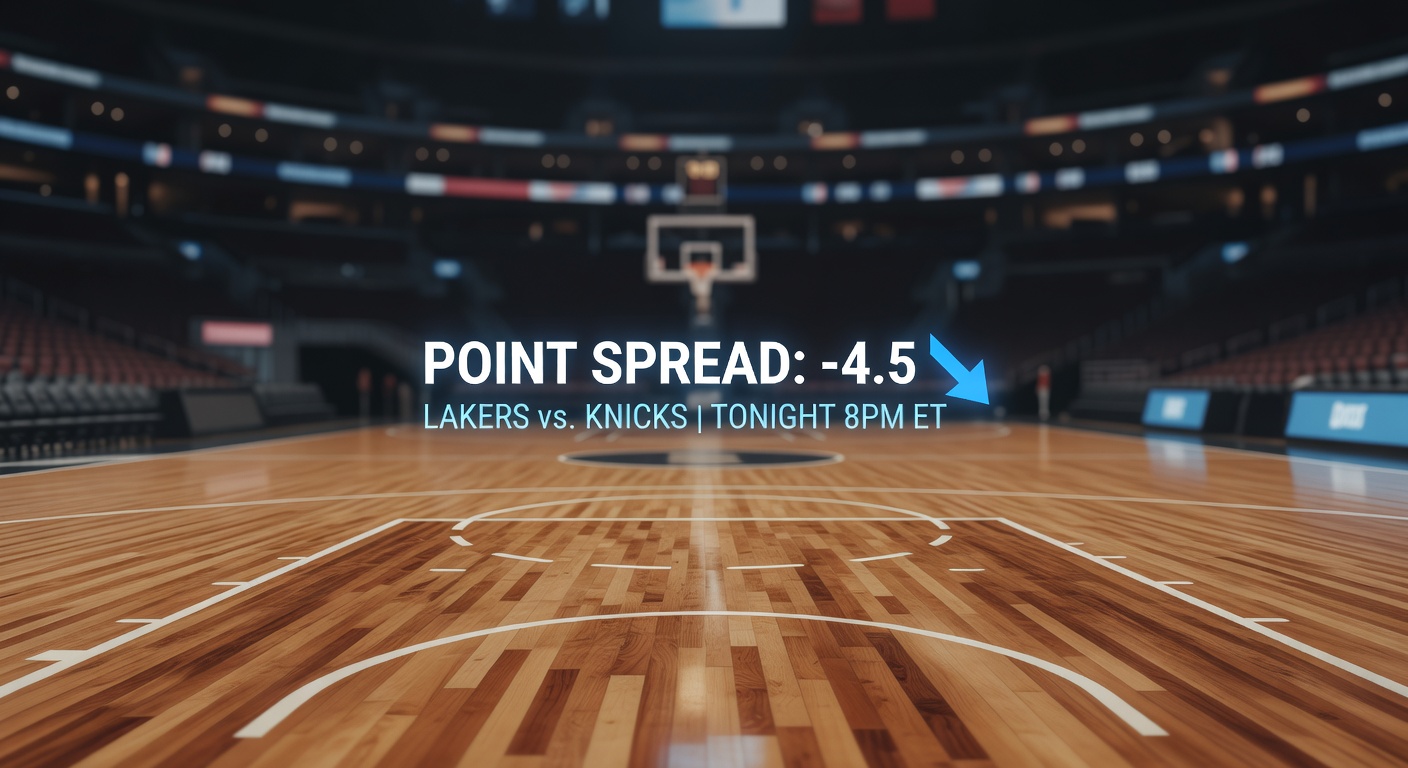
I watch basketball with my grandson sometimes. The games are exciting. People bet on them.
Point spread betting is a way to bet on basketball that acknowledges that one team is better than another.
Let me explain it gently.
What a Point Spread Is
A point spread is a handicap. One team is favored. One team is underdog.
Example: Lakers minus 5 versus Suns.
This means Lakers are expected to win by 5 points. The spread tries to balance the bet: you can bet Lakers and need them to win by more than 5. Or bet Suns and they can lose by less than 5.
If Lakers win by 7, bettors on Lakers win. Bettors on Suns lose.
If Lakers win by 3, bettors on Suns win (they covered the spread).
The Odds
Most point spread bets are -110. You risk 110 to win 100.
This is the sportsbook's vig (vigorish, the fee).
To break even, you need to win 52.4 percent of your bets (the vig takes the rest).
Data-Driven Approach
Winning at NBA spreads requires predicting games better than the market.
Factors that matter:
- Team strength (win-loss record, point differential, offensive/defensive ratings)
- Rest (teams that play on back-to-back nights are weaker)
- Injuries (missing a star player weakens a team)
- Head-to-head history (matchup-specific advantages)
- Home court (teams play better at home, typically +2-3 points)
Factors that don't matter:
- Streaks (a team on a five-game win streak is not inherently stronger tomorrow)
- Betting public sentiment (the sportsbook already accounts for this)
- Narrative ("team needs a win after a loss") - irrelevant to probability
The Practical Process
- Get a dataset: every NBA game from the last three seasons with final score and point differential.
- Calculate team ratings: offensive rating (points per 100 possessions) and defensive rating (points allowed per 100 possessions).
- Adjust for home court (+2.5 points typically).
- Predict the point differential: Team A rating minus Team B rating plus home court adjustment.
- Compare your prediction to the spread. If the spread is 5 and you predict Team A wins by 7, that's +2 value.
- Only bet if your prediction has significant edge (more than the vig requires).
The Challenge
The sportsbooks use similar models. Their spreads are already optimized.
To beat the spread, you need to find inefficiencies the sportsbook missed. This might be:
- Injury information not yet reflected in the line
- Rest advantage not valued correctly
- Team strength change mid-season (improvement or decline) not yet baked in
Most casual bettors can't find these. Most professionals barely can either.
The Honest Assessment
NBA spreads are efficient. Professional bettors with teams of statisticians beat the market at 52-54 percent win rates. Hobbyists typically achieve 48-50 percent.
If you bet on NBA for entertainment, you're paying a fee (the vig) for that entertainment. That's fine.
If you think you can beat the market, you need data, discipline, and months of testing to know.