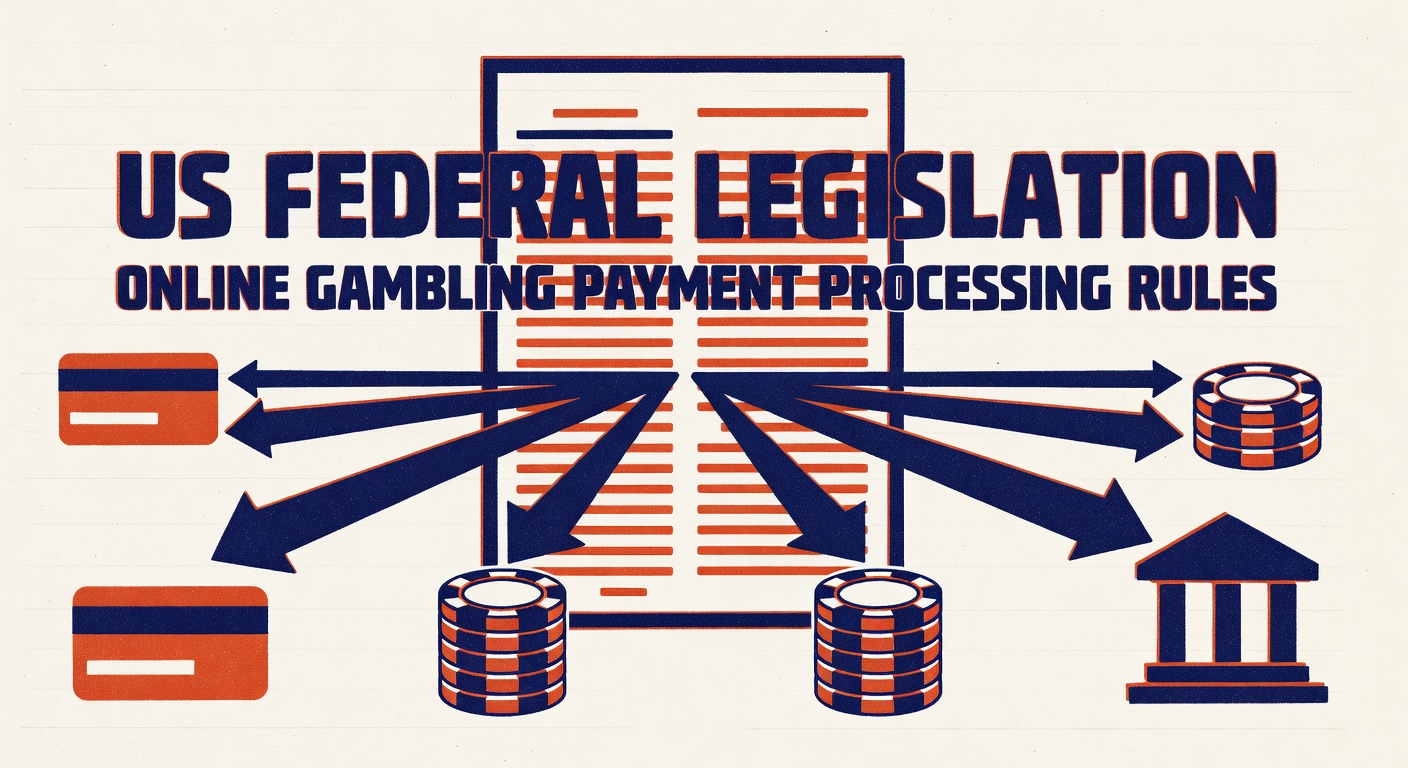
The Unlawful Internet Gambling Enforcement Act (UIGEA) was passed on September 30, 2006, as an amendment to the Safe Ports Act. The law took effect on June 1, 2007.
The stated purpose: restrict financial transactions related to unlawful internet gambling.
The practical effect: American players could no longer deposit at foreign poker sites using American bank accounts. The law had massive consequences.
What UIGEA Actually Does
UIGEA prohibits financial institutions from accepting payment card transactions and bank transfers for unlawful internet gambling.
"Unlawful" is defined by each state. Some states explicitly permit poker. Others explicitly prohibit it. Most are ambiguous.
The law's mechanism: financial institutions (banks, credit card companies, payment processors) must establish and implement written policies to identify and block gambling transactions.
A bank that violates UIGEA faces fines of up to 100,000 per transaction. That's deterrent-level severe.
The Poker Exodus
Before UIGEA, American players could deposit at PokerStars, Full Tilt, PartyPoker using credit cards or bank transfers. The process was simple.
After UIGEA, American banks began refusing gambling transactions. Visa and Mastercard stopped processing poker deposits. Bank transfers were declined.
Operators tried to work around UIGEA. They created payment processors in jurisdictions that allowed it (Costa Rica, Estonia, Cyprus). They used shell companies and payment laundering techniques.
These workarounds were effective for a while. But by 2011, the Department of Justice (DoJ) indicted PokerStars, Full Tilt, and PartyPoker on UIGEA violations. The indictment was called "Black Friday."
Black Friday (April 2011)
On April 15, 2011, federal prosecutors in New York indicted the three major poker operators. The charges: violating UIGEA, money laundering, and fraud.
The operators' domains were seized. American players' accounts were frozen. Millions of dollars in player balances were inaccessible.
Full Tilt collapsed. Players eventually recovered their balances after bankruptcy proceedings, but many lost funds.
PokerStars and PartyPoker negotiated settlements. PokerStars settled for 731 million dollars (the largest payment in DoJ history for gambling-related violations at the time).
Americaen online poker effectively ended.
What UIGEA Didn't Prohibit
This is important: UIGEA didn't explicitly ban online gambling. It prohibited financial transactions.
Online sports betting by Nevada sportsbooks? Legal (they're in Nevada). Online poker in New Jersey? Legal (it's New Jersey-licensed). Online casino gaming in Pennsylvania? Legal (Pennsylvania-licensed).
What UIGEA banned was American players using foreign operators. That's the restriction.
Post-UIGEA Landscape
After 2011, individual states began licensing online poker and casino gaming.
New Jersey (2013): online poker and casino gaming approved. Pennsylvania (2019): online poker and casino gaming approved. Nevada (2013): online poker approved. Delaware (2012): online poker approved (single-state network).
These are state-level operations. They're legal within their jurisdiction but not across state lines.
Foreign operators largely exited the American market. PokerStars returned in 2015, but only to regulated states (New Jersey, Pennsylvania, Nevada, Delaware).
The Regulatory Ambiguity
UIGEA left ambiguity about what constitutes "unlawful internet gambling."
Poker: some states consider it a game of skill (legal). Others consider it gambling (prohibited). This ambiguity created legal uncertainty.
Sports betting: similarly ambiguous until the Supreme Court's 2018 ruling (Murphy v. NCAA) overturned the Professional and Amateur Sports Protection Act, allowing individual states to legalize sports betting.
The ambiguity meant that foreign operators and payment processors didn't know their legal status. This risk led them to exit the American market.
Lasting Effects
UIGEA reshaped American gambling law. It established that Congress could regulate internet gambling through financial system restrictions, not just operator prosecution.
It also showed that operators couldn't reliably operate in the American market without state-level licensing.
Post-UIGEA, the American online poker industry shifted from unregulated foreign operators to regulated state-based operators. This is a better system for players (more protection, legal recourse if disputes arise).
But it also meant American poker liquidity declined (no unified player pool across states) and accessible poker games became harder to find for years after 2011.