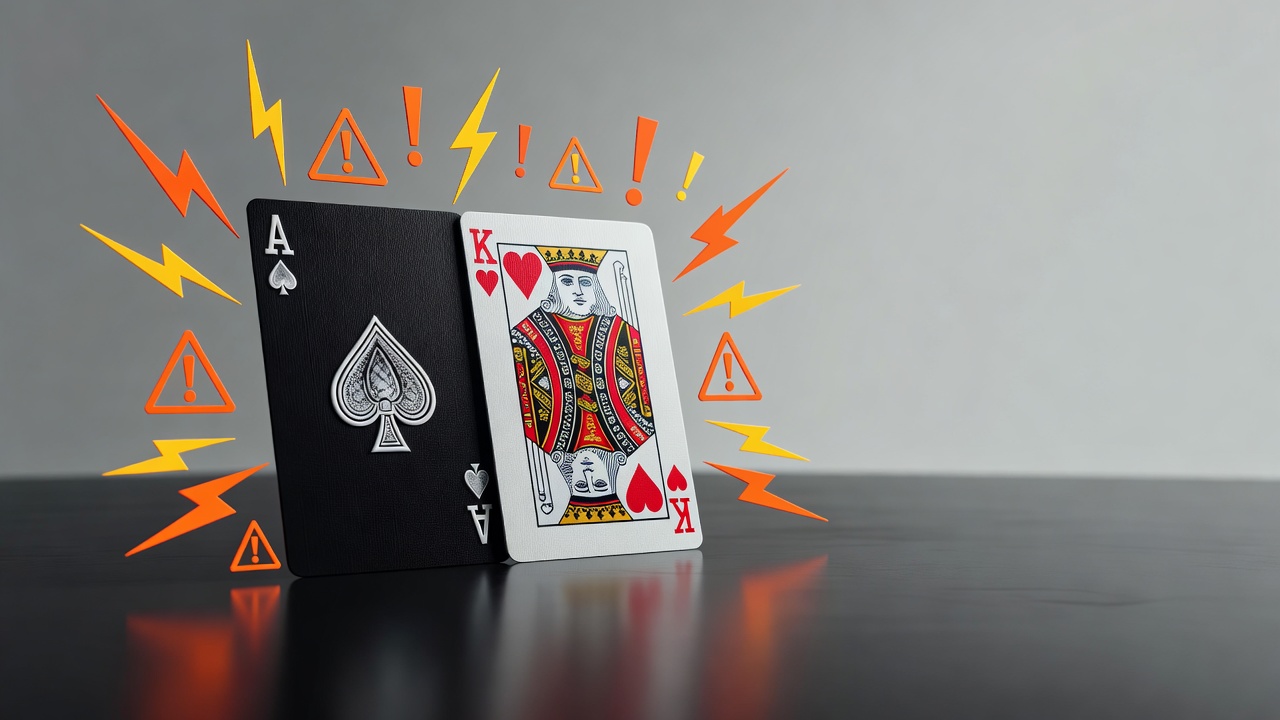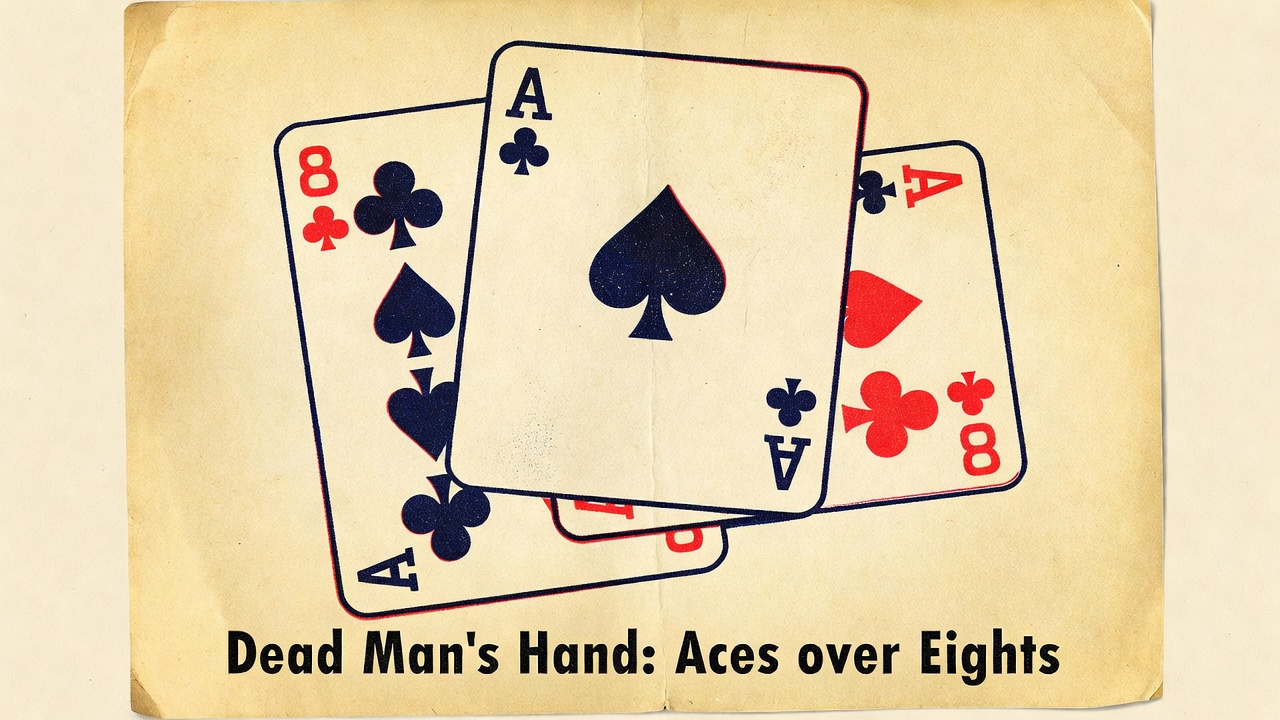
Aces and eights. Pair of black aces and black eights. That is the Dead Man's Hand, and it came into existence on August 2, 1876, when Wild Bill Hickok got shot in the head while playing five-card draw at Nuttal and Mann's saloon in Deadwood, Dakota Territory.
Hickok was holding those specific cards when Jack McCall, a loser with a grudge, walked up behind him and fired a revolver. The bullet went through Hickok's brain. He was done. Dead in seconds. His hand remained on the table: pocket aces, pocket eights, and a queen kicker. Black aces and black eights. No one knows what the fifth card was, though various accounts claim it was an ace, making it a full house, or a queen, making it two pair.
The hand itself was not particularly strong. In modern poker terminology, it is 85s. Pair of eights is not what you want to get killed holding. But the legend that built up around it made the hand famous. No other hand in poker history carries the supernatural weight that aces and eights does.
Why This Matters
Hickok did not die because he was holding a bad hand. He died because he was sitting with his back to a door, which violated the fundamental rule of frontier survival. He died because McCall bore a grudge. He died because the saloon was full of people and no one stopped the shooter. But the hand he held became immortal.
In card rooms across America, aces and eights became taboo. Superstitious players refused to play the hand. Some still will not. Dealers learned to announce it respectfully when someone caught aces and eights. The hand gained a curse.
The range of cards Hickok could have held is actually enormous. We know the four cards, but not the complete hand. Some accounts say it was a queen. Some say it was an ace, making a full house, which is a genuinely strong hand. Imagine getting shot while holding a full house. Imagine that being the moment your luck runs out.
But the mythology stuck. Aces and eights became the Dead Man's Hand. It entered poker culture as a superstition, as something that carried weight beyond mere probability. Hickok was the fastest gun in the west, or at least a man with that reputation, and he could not outrun fate or a bullet fired from five feet away.
The Dead Man's Hand is not dangerous because it is weak. It is dangerous because someone decided it was dangerous, and superstition became poker law.
The actual poker value of aces and eights is middling. Pair of eights is not a premium hand. Pair of aces is the best pair in the deck. If the hand included an ace as the fifth card, it would have been a strong holding. But strength in poker is relative. Strength depends on position, on stack sizes, on opponents, on a thousand variables. Strength is not absolute.
What made the Dead Man's Hand matter was not the cards themselves but the story around them. The same way superstitions in casinos today are not based on mathematical reality but on narrative and belief. Players touch the table for luck. They refuse to say certain words. They develop rituals. None of this changes the RNG or the odds. But it changes how players feel.
Hickok was holding whatever hand he held when the bullet hit. The legend says it was aces and eights. That is what is important now. That is what players remember, what dealers mention, what carries through a hundred and fifty years of poker lore. The Dead Man's Hand is real because people believe it is real. That belief is the real power.