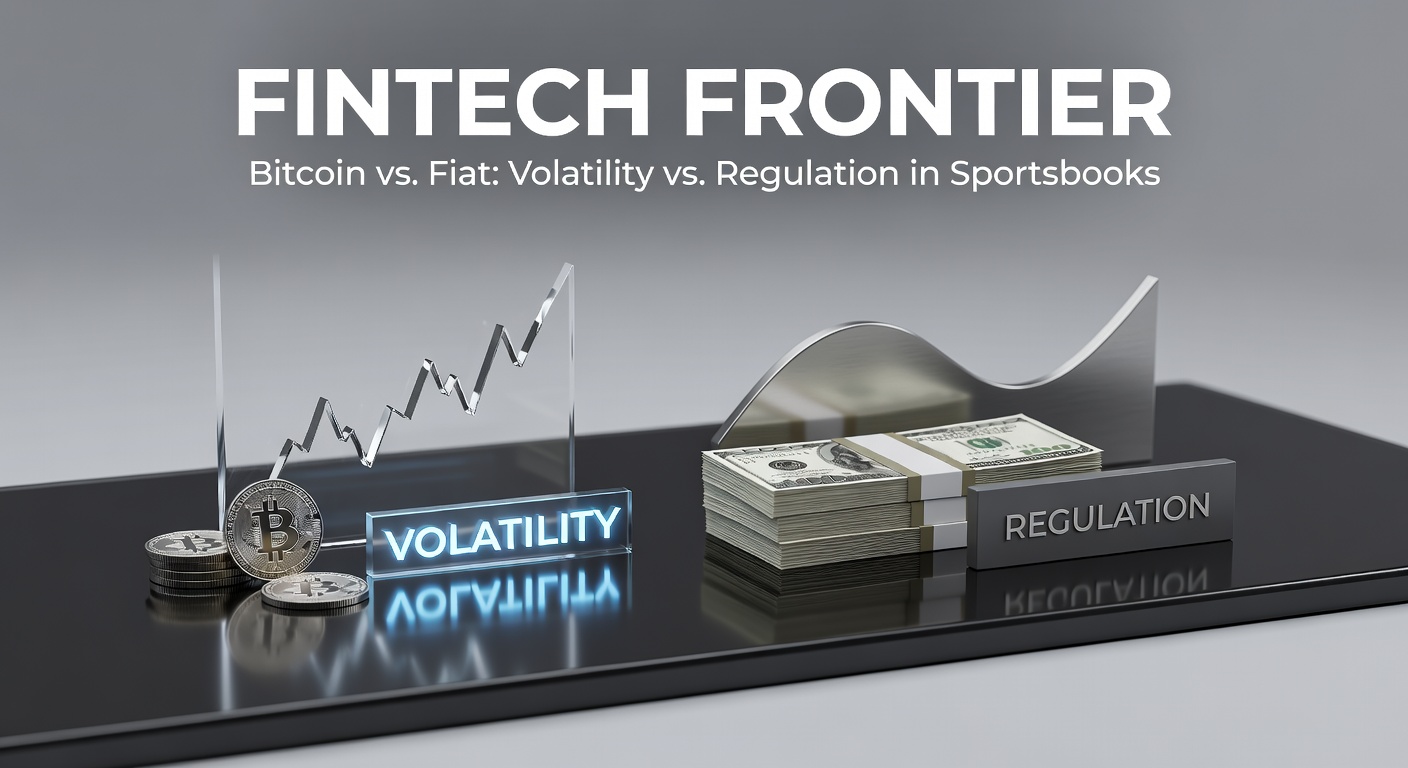
Bitcoin sportsbook versus fiat sportsbook. Both want your money. Only one of them wants to know your name.
That is the setup. Now let me do the film study, because this is a matchup worth breaking down on five specific dimensions.
1. Deposit and withdrawal speed
Fiat sportsbook: A debit card deposit clears in seconds. A bank transfer deposit clears in one to three days. Withdrawals are the real story: most major US operators pay out same-day or next-day on smaller amounts via PayPal or ACH, with larger amounts going through identity verification first. DraftKings, FanDuel, and BetMGM all advertise 24 to 48 hour withdrawal windows. Sometimes they hit those windows. Sometimes they do not.
Bitcoin sportsbook: Deposit hits when the blockchain confirms, which is typically 10 to 30 minutes for Bitcoin main chain, or near-instant on Lightning Network. Withdrawal is the big pitch: the sportsbook broadcasts a transaction to your wallet, and the funds clear on confirmation. Five minutes to an hour, typically, no bank involvement.
Edge: Bitcoin. On pure speed, particularly for withdrawals, crypto sportsbooks are running a full-court press and fiat books cannot match. That said, speed without trust is just efficient disappointment.
2. Fees and rake
Fiat sportsbook: Deposit usually free. Withdrawal usually free through most channels. Hidden cost: the vig on the bets, which is typically 4.5 to 5 percent at major US books. Not unique to fiat, that is just how sportsbooks work.
Bitcoin sportsbook: Deposit free or small network fee. Withdrawal charges a network fee, which on Bitcoin main chain can run anywhere from a dollar to a hundred dollars depending on congestion. Lightning fees are pennies. The vig on the bets is often comparable to fiat, though some crypto books offer reduced juice (minus-105 instead of minus-110 on spreads) as a competitive hook.
Edge: Slight edge to Bitcoin on the bet vig if the operator offers reduced juice. Wash on transaction fees when you account for Bitcoin network costs.
3. Regulatory protection
Fiat sportsbook: If you are in New Jersey and you play at FanDuel, you are protected by state law. Your funds are segregated. The dispute resolution pathway runs through the New Jersey Division of Gaming Enforcement. If the operator misbehaves, there is an enforcement body with actual authority. This is a real floor under the relationship.
Bitcoin sportsbook: Almost always offshore, typically licensed in Curacao or similar jurisdictions. The nominal regulator has limited enforcement capability. Dispute resolution runs through the sportsbook's customer service, and if that fails, through a small-claims-style arbitration that may or may not be binding. If the sportsbook decides not to pay you, the practical options are limited.
Edge: Fiat by a mile. This is not a close call. Regulation is the single biggest differentiator, and fiat books operating in regulated states are categorically in a different risk class than offshore crypto books. It is a pinch-hit in the ninth inning, and regulation wins.
4. Privacy and KYC friction
Fiat sportsbook: KYC at account opening in most regulated US states. You provide a social security number, a driver's license, sometimes a selfie. Geo-location software locks your account to your state. A withdrawal will often trigger additional verification. The operator knows everything about you that a bank would know.
Bitcoin sportsbook: Varies. Some offshore crypto books require minimal KYC at all: email, password, go. Others have tightened up over the last two years as regulatory pressure on offshore operators has grown. Even at the loose end, the operator typically does not know your legal name unless you volunteer it.
Edge: Bitcoin for privacy, if privacy is what you are optimising for. But privacy is also the thing that creates the regulatory weakness in dimension three. These are two sides of the same coin, and you cannot have the low-KYC experience with regulator-backed dispute resolution.
5. Betting product variety
Fiat sportsbook: Deep catalogues on US major leagues. Every NFL game has dozens of prop markets. Live betting is extensively supported. Same-game parlays are everywhere. The product has been engineered for US bettor preferences over eight years of intense competition.
Bitcoin sportsbook: Often weaker on US markets, stronger on international soccer, esports, politics, novelty bets, and niche sports. Some crypto books will take action on the Eurovision Song Contest or the next pope, which is not a product offered at DraftKings. The prop-market depth on major US leagues is typically thinner.
Edge: Fiat for breadth and depth on US sports. Bitcoin for anything weirder.
The scoreboard
Here is the tale of the tape at a glance.
| Dimension | Fiat | Bitcoin |
|---|---|---|
| Speed of deposits and withdrawals | Decent | Fast |
| Fees | Low, plus standard vig | Variable, some reduced-juice offers |
| Regulatory protection | Strong in regulated states | Weak |
| Privacy and KYC | Heavy KYC | Light KYC |
| Product variety on US sports | Deep | Moderate |
My prediction
Here is the call. For a US bettor in a regulated state, betting on major US leagues, the fiat sportsbook is the right play. The regulatory floor under your funds is worth more than the faster withdrawals. If you are running a serious bankroll, this is not close.
For a bettor in a jurisdiction without legal online sports betting, who wants to bet anyway, who is comfortable with the tradeoffs and has a wallet setup that is not hack-vulnerable, a crypto sportsbook offers an alternative. Go in with eyes open. Keep small balances. Withdraw often. Treat the operator as a counterparty that may disappear tomorrow, because in the offshore market, any of them might.
For the bettor who wants both the speed and the regulatory protection, the product does not yet exist at scale. A US-regulated, state-licensed sportsbook that accepts stablecoin deposits via a properly-compliant on-ramp is the future, and a few operators are testing the edges of it. When it arrives at scale, the fiat-versus-crypto distinction collapses into just another payment method, which is probably where the whole thing was headed all along. Until then, pick your tradeoffs.