The Champions League is the only tournament where a team from Kazakhstan plays a team from Portugal and nobody finds this strange. That's the format. Sixteen teams from different countries, same rules, same grass. Someone has to handicap this.
Five teams from the Premier League, typically four from La Liga, Serie A sends three, Bundesliga sends four. The gaps are not theoretical. Manchester City's budget dwarfs that of RB Leipzig's by roughly 300 million dollars. But both are in the tournament. The betting markets have to account for this.
The Market Structure
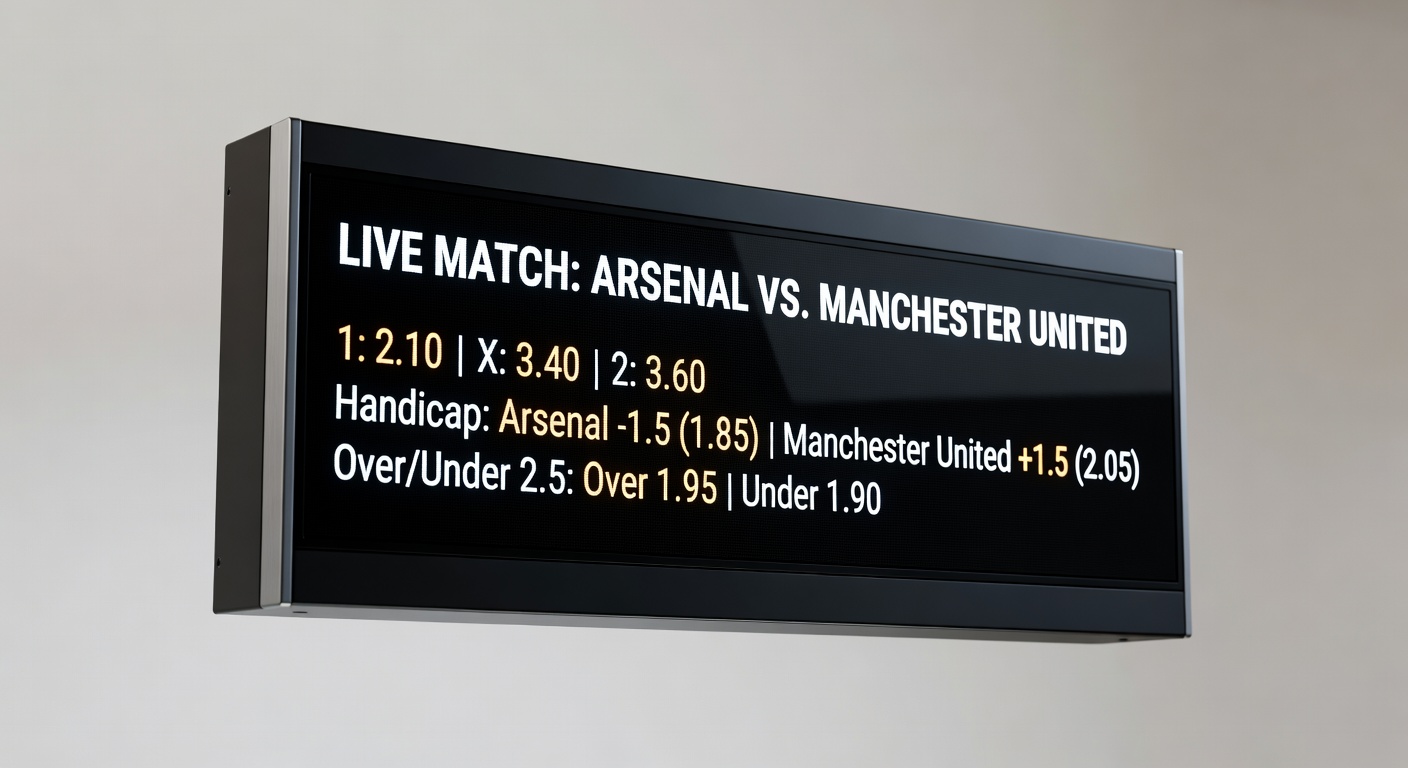
European Cup betting centers on three outcomes: home win, draw, away win. Unlike moneyline in American sports, draw is a possible result. A team can travel, not lose, and both sides collect points. This fundamentally changes the math.
If you're betting match-winner (not aggregate in a two-legged tie, just the single match), the possible results are:
- Home team wins (at various margins: 1-0, 2-0, etc.)
- Draw (any score with equal tallies)
- Away team wins
The draw probability matters. In a typical Champions League group stage match, draws occur 30-35 percent of the time. In knockout rounds, teams play more cautiously and draws increase to 40-45 percent. That changes the expected value of betting a home team win. If you think home teams win 40 percent of the time and draw 40 percent, away wins are down to 20 percent. The odds you're offered need to reflect this.
Sharp bettors use expected-goals models. This concept: track shots taken by each team. Categorize them by distance, angle, defender pressure. Assign probability that each shot becomes a goal. Sum across all shots. The result is expected goals, or xG. A team with xG of 2.5 typically scores 2-3 goals over time (the model is backward-looking, not predictive).
Bayern Munich, over multiple seasons, averages 2.8 xG against most opponents. When Bayern plays a team that generates 1.2 xG, the expected outcome is Bayern winning by roughly 1.6 goals (2.8 minus 1.2). Markets price this. Bayern might be -1.5 on the Asian Handicap. If you believe the xG model and you trust the data, you can find value.
The detail that reveals understanding: knowing which teams regress. A team that outperformed its xG last season (won more games than shots suggested) typically regresses the next season.
Liverpool, under Jurgen Klopp, overperformed xG for years. This was attributed to clinical finishing and mental resilience. Eventually, opponents studied their patterns, and Liverpool's edge diminished. Betting markets account for this with some lag. That lag is opportunity.
Home-field advantage in European football is profound. Eintracht Frankfurt loses at Bayern (away) but beats them regularly at home. The crowd, the familiarity with the pitch, the travel fatigue on the away team all compound. Home teams in Champions League group stage win roughly 45 percent of games, draw 30 percent, and lose 25 percent. Away teams win only 25 percent. That 20-point swing drives everything.
The Specific Matchups
Bet365 and Betfair both offer live betting on Champions League matches. The odds move in real time based on goals scored, ejections, injuries. A team going down a player to injury shifts the calculus immediately.
Goalkeeper quality matters more in European football than in domestic leagues. The difference between a top-tier keeper like Gianluigi Donnarumma and a relegation-level keeper like Alphonse Areola is roughly 0.3-0.5 goals prevented per match. Over a season, that's the difference between winning a title and finishing fourth. Markets underprice this.
One more specific: injury reports are released 24 hours before the match. Teams will sometimes list players as doubtful when they're likely to play, and likely to play when they're doubtful, in an effort to confuse opponents and bettors. The professional syndicates have verified contacts at clubs who tell them the actual status. That information advantage moves sharp money quickly. If a star player is rumored doubtful but syndicates know he's playing, his team's odds improve. That shift happens fast.
The whole enterprise works on the principle that most bettors handicap incorrectly. They overvalue recent results. They undervalue underlying quality. They don't properly account for draw probability. The market finds equilibrium, but not before the sharpest bettors extract value.