I spent forty years under the lid of slot machines. Bally, IGT, Aristocrat, WMS. Every machine has a meter. The meter records every play, every win, every coin drop. You trust the meter. You do not trust your memory. The meter is the truth.
Sports bettors are the opposite. They remember their big wins. They forget their losses. They think they are 50-50. They are 45-55. The five percent difference destroys them. The only solution is to record everything.
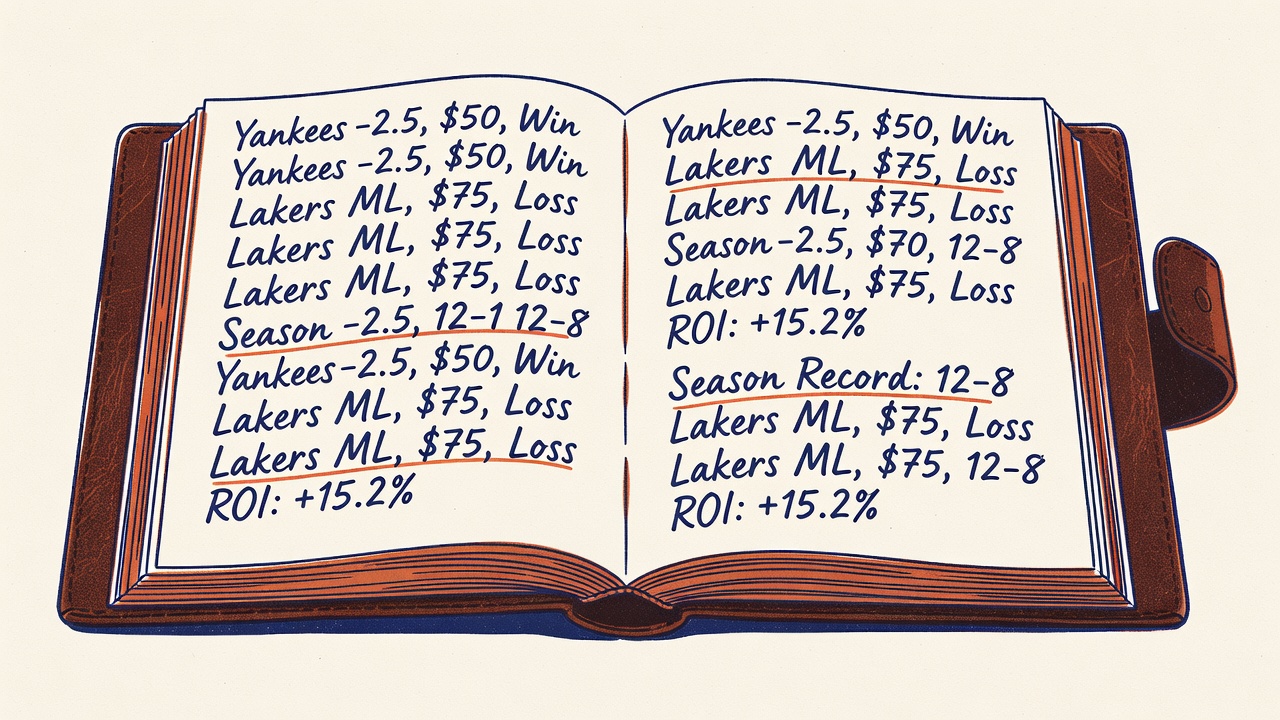
Here is what serious sports bettors do: they keep a spreadsheet. Every bet goes in the spreadsheet. The date. The sport. The game. The bet type (moneyline, spread, total, parlay). The odds. The stake. The result. At the end of each month, they calculate the win percentage and the return on investment.
Win percentage is not the only metric that matters. Return on investment matters more. You can win 55% of your bets and still lose money if your average losing bet is larger than your average winning bet. You can win 45% of your bets and make money if your average winning bet is larger than your average losing bet.
What To Record
Minimum fields: date, sport, game, bet type, odds (or line), stake, result, profit/loss. Optional fields: weather (for football), injuries (for any sport), personal notes (why you made this bet).
At the end of each week, calculate: total bets, total stakes, total profit/loss, win percentage, average bet size, largest win, largest loss, streak (current and longest winning/losing streak).
The metrics reveal trends. If your win percentage is 55% but your ROI is negative, you are overestimating your edges. If your largest loss is more than three times your average bet, you are taking too much risk. If your losing streaks last more than 10 bets, you might be tilting (changing your strategy after losses).
The Discipline
Record-keeping requires discipline. You have to enter bets immediately, before the outcome is known. You cannot change your odds after the result. You cannot move a loss into a different category. You cannot forget about a bad bet.
Many bettors keep records for three months, see they are losing, and stop. The records were working correctly. The records showed you that your process was bad. Stopping the records does not change reality. It just removes the evidence.
I have seen good bettors and bad bettors. The difference is not luck. The difference is that good bettors know their record. Bad bettors think they know their record.
Software and Platforms
You can use spreadsheets or dedicated betting software. The software is usually better because it calculates metrics automatically. But spreadsheets work if you set them up correctly.
Some platforms (DraftKings, FanDuel, BetMGM) have built-in bet history. Use it. Export your bets monthly. Build your own aggregate view. Do not rely on the platform to calculate your win rate. The platform calculates your account balance, not your actual performance.
Account balance includes signup bonuses, cashback, and other credits. Performance is just the bets you made. The difference matters. A bookie can make money giving away bonuses if the customers are net losers.
The Outcome
Sports bettors who track their records tend to improve. Not because tracking makes them smarter. But because tracking shows them where they are weak. They see that they lose on parlays, so they stop making them. They see that they win on total bets, so they focus there. They see that Monday night bets have a bad ROI, so they skip Mondays.
This is the only way to improve: measure, identify weakness, adjust. The record is the mirror. You cannot improve if you do not look at the mirror.