A gentleman arrived at the Monte Carlo room on a Tuesday evening with instructions that he wanted only the most discreet arrangements. The conversation drifted, as these conversations do, to cricket. It seemed he had business interests in Mumbai and Delhi and found himself watching the matches during idle hours in his hotel suite. He understood nothing of the game and wanted to understand less, but he'd heard one might wager on it with some precision. The matter required explanation.
Cricket offers three distinct formats, each with its own wagering landscape. Test cricket spans five days. A single match between England and Australia, for instance, extends across nearly a week of play. The odds reflect this length. Markets stay open throughout, adjusted inning by inning, day by day. One closes with knowledge that the morning will bring new information.
One-day internationals compress the action into a single day's play. Each side bats once, limited to 50 overs (a unit of delivery). The pacing is faster. The betting is tighter. Odds shift dramatically when a wicket falls or a batsman strikes a boundary. An industrialist from Hamburg, a man whose name I'll keep to myself, preferred these matches because the duration matched his tolerance for attention.
T20 cricket is the newest format. Twenty overs per side. Two hours of play, more or less. The aggression is constant. It suits the evening-entertainment model. Bettors can watch a complete match before dinner.
The Market Structure
The standard cricket markets operate around three variables: which team wins the match, how many runs will be scored, and which players will perform specific actions. The first is straightforward. The second requires understanding pitch conditions, weather, and team composition. The third is where subtle knowledge becomes profitable.
Specific markets available at licensed operators (Bet365, DraftKings, and Betfair all offer these) include:
- Match winner: which team wins the game
- First innings total: how many runs the batting team will score in their inning
- Individual batting performance: how many runs a specific player will score
- Man of the match: which player will be declared the match's outstanding performer
- Top batsman: which player across both teams will score the most runs
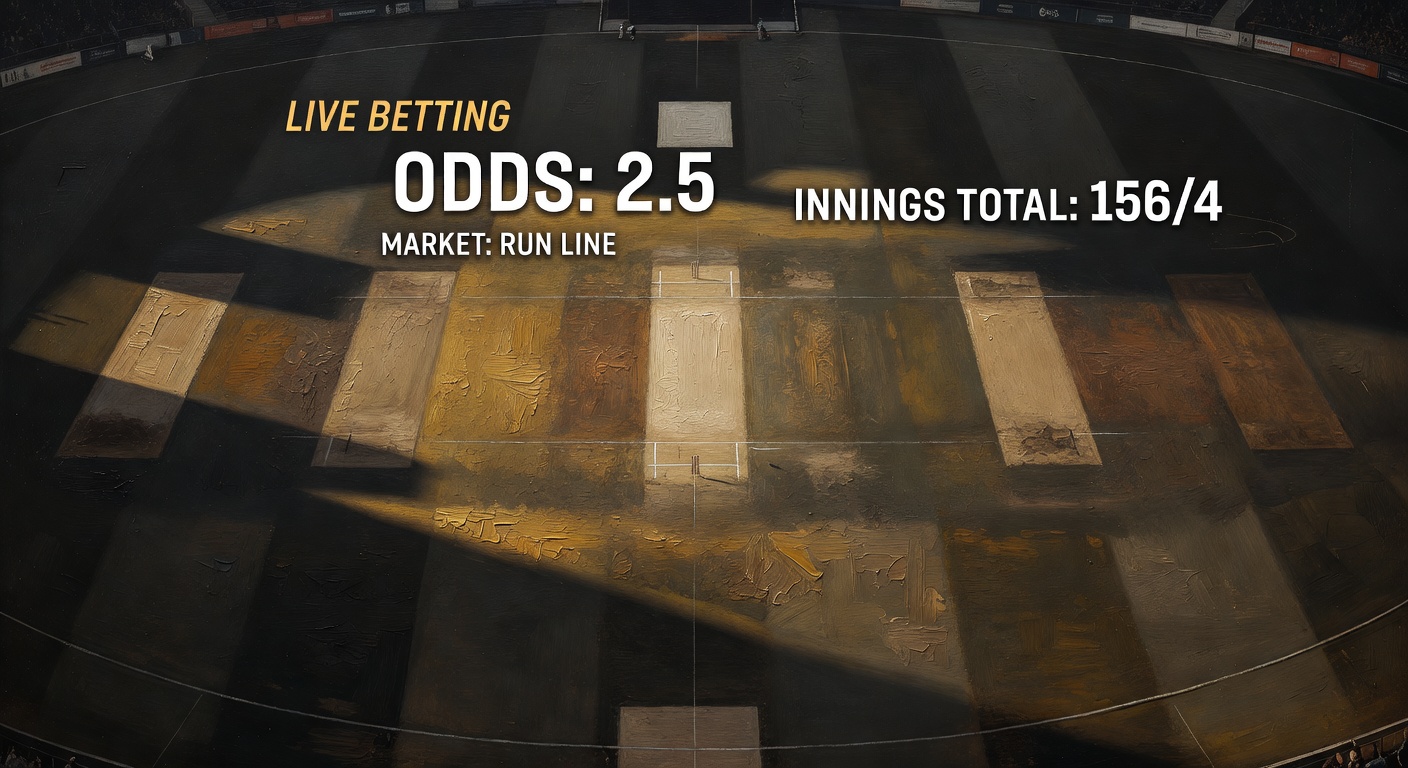
The run-line market (available in some jurisdictions) handicaps one team with a run deficit, similar to Asian Handicap in soccer. India might be -40 runs and Australia +40 runs. Your bet settles based on the final margin plus the handicap.
A woman who visited regularly had spent her youth in Sri Lanka and understood cricket as natives do. She knew that Sri Lankan pitches favor their spinners, that their openers struggled against short-pitched fast bowling, and that certain players performed differently in day matches versus evening matches. She wagered on individual performance markets, on first-innings run totals, and occasionally on outright winners. She was rarely shocked by outcomes because she understood the variables.
The Strategic Edge
Cricket betting rewards specific knowledge about pitch behavior, player form, and head-to-head records. A pitch that favors batsmen one week might favor bowlers the next depending on weather and ground maintenance. This isn't theoretical. During the Indian Premier League in April, pitches at the Delhi ground typically support batsmen early in the season. By the playoffs in May, the same pitches have worn and deteriorate, favoring spinners.
Players recover from injury at different rates. A fast bowler returning from hamstring strain isn't available at full capacity for weeks. Markets often undervalue this in the early matches after return. The professional wagerers I observed tracked injury timelines carefully.
Team composition changes shift expected outcomes. When Australia arrives in India with a different batting order, the odds on first-innings totals need recalibration. The market adjusts slowly. That lag is where edges exist.
One more detail: the home advantage in cricket is profound. India plays better at home than away by an average of 15-20 percent in win probability. England similarly performs better at home. This shows up in the odds, but not as thoroughly as the data suggests it should. That's where careful observers find value.
The gentleman from Hamburg eventually won 8,000 euros over a series of T20 matches. He stopped then, as these particular visitors tend to do. He understood the game no better than when he started, but he'd learned the markets.