I first logged into a decentralized poker room in 2021. The game was Texas Hold'em, the stakes were nominal, the chips were denominated in a token I had never heard of, and the lobby was hosted on a Discord server with 436 members. The room was run, nominally, by nobody. Some piece of smart contract infrastructure sat in the background settling hands. In practice, the room was run by four regulars who knew each other's real names and approximately nobody else's.
I want to describe what I saw, and then ask whether the thing could scale. The answer is more interesting than the argument for or against it has tended to be.
The scene as it actually worked
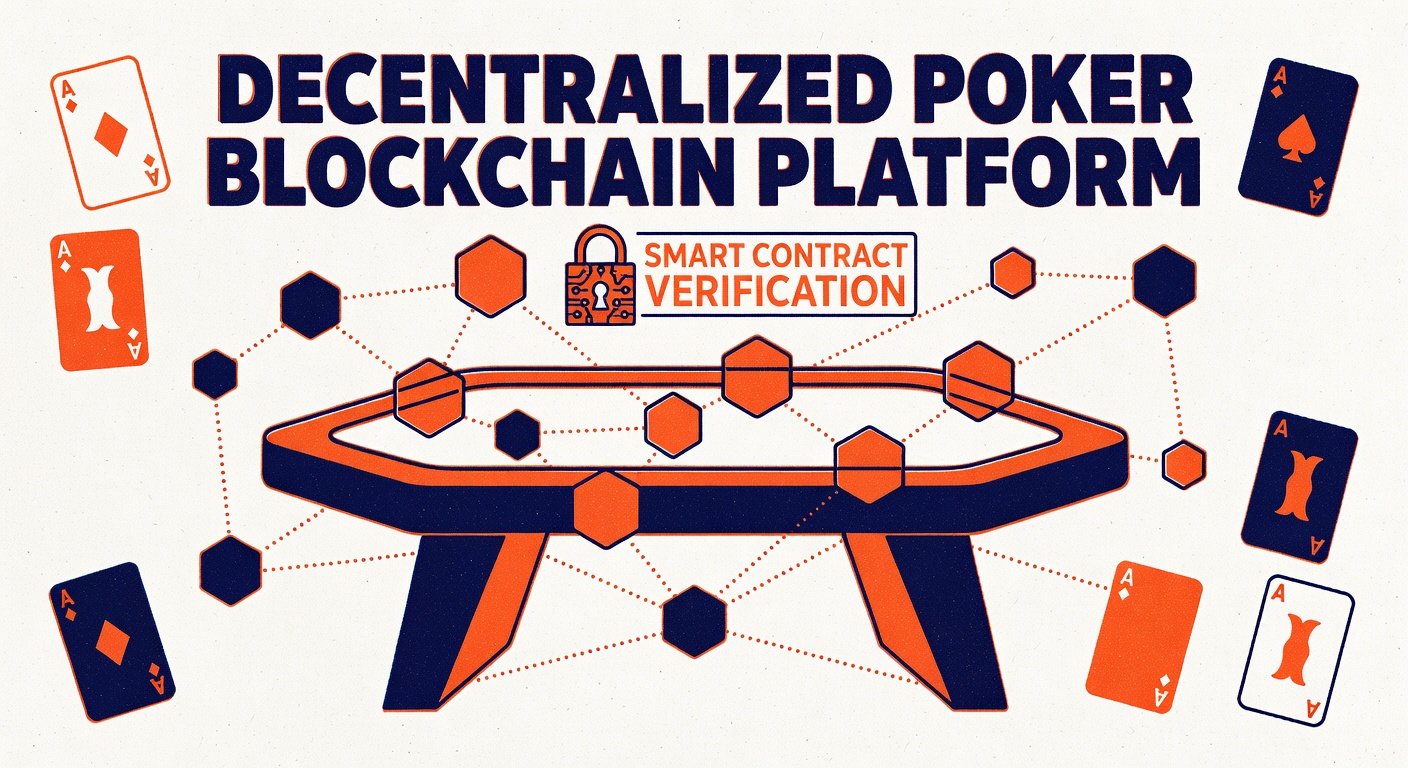
The room ran on a dealer-less poker protocol, one of several that appeared between 2018 and 2022. The players' private cards were distributed via a cryptographic scheme called mental poker, in which all players at the table jointly shuffle and partially decrypt a deck without any single party ever seeing the whole thing. When a hand is over, the cryptographic commitments can be checked after the fact. There is no central server to trust; the math enforces that the deck was shuffled honestly.
In practice, what this meant was that every hand was slower than a regulated online room. Noticeably slower, the way a train slowing for a bend is slower, not dramatically slower. A timer of ten seconds became fifteen. A tournament that would have taken three hours took four.
What it also meant, and this is the part nobody quite mentioned out loud, was that the protocol required every player to remain online and responsive throughout the hand. A dropped connection did not just time-bank the player; it broke the cryptographic handshake for the entire table, and the hand had to be reconciled through the smart contract's dispute logic. Three or four of these per session were normal. Eight or ten on a bad night.
The regulars and the ritual
I noticed quickly that the four nightly regulars treated the room as a social space first and a poker room second. One of them, who went by a handle I will render here as R., ran a voice channel parallel to the table. He muted himself when he was in a hand, unmuted when he folded, and narrated the flop for anyone listening. This is not how regulated online poker works. Regulated online poker is, by design, silent and anonymous and fast. This was the opposite: slow, named, and conversational.
The three other regulars had roles in the social hierarchy that were invisible to a new player and obvious within a week. S. was the patient teacher who explained why a bet sizing was bad. B. was the loud critic who berated loose calls. And K. was the moderator, the one who banned scammers and defused arguments, not through any formal admin rights within the smart contract, but through the softer authority of being the person everyone in the Discord trusted.
This is the feature the blockchain-replaces-poker-rooms narrative misses entirely. The poker room is not, primarily, a piece of infrastructure. It is a set of social relationships that infrastructure enables. When the smart contract replaces the operator, it does not replace the relationships. Someone still has to do the work of maintaining the community, and that someone, typically, does it for free, and typically, quietly resents the free part.
Where the protocol actually improved things
Three things were better than the regulated equivalent, and they are worth naming.
First, deposits and withdrawals. A player in a jurisdiction where online poker is legally ambiguous (and this is a meaningful share of the world) could fund an account in a stablecoin within minutes and withdraw in minutes. No KYC friction, no card declines, no three-week withdrawal queues. The social cost was real, but the procedural cost was near-zero.
Second, provable fairness. Every hand's cryptographic trace was auditable after the fact. A player who felt a hand had been rigged could, in principle, check the commitments and prove it, or prove that it had not been. This was almost never done in practice, because the procedure was tedious and the players mostly trusted each other. But the option was there, and it shaped the room's culture. Accusations of rigging, common in the noisy forums around regulated poker, were rare here. The math was right there.
Third, rake structure. The protocol collected a fixed fraction of each pot and distributed it algorithmically: some to the protocol treasury, some to liquidity providers who had backed the table, some burned. The effective rake was between 2 and 3 percent. Most regulated online rooms charge 5 percent. This difference, over a year of volume, was noticeable to the regulars.
Where it did not work
The room never scaled past about thirty active players in a night. This is the part to sit with.
The reasons were not, as the skeptics of blockchain often claim, that the technology was broken. The technology worked, mostly. The reasons were that the thing a casual player actually wants, which is to log in at 9pm on a Tuesday, fire up a game, play for ninety minutes, and log out, was not what the protocol offered. The protocol offered a slower, more technically demanding version of the same activity, with a small cultural community attached. The cultural community was the reason to stay. The cultural community was also the reason most new arrivals bounced within two sessions. Walking into a room of four regulars who all know each other is uncomfortable, and the user interface did nothing to soften the landing.
The deeper question
Decentralized poker is trying to do two things at once. It is trying to replace the trust-provided-by-operator with trust-provided-by-cryptography, and it is trying to replace the lobby-provided-by-operator with a community-provided-by-users. The first substitution works, technically and ethically, as well as anyone has made it work. The second substitution is where the model strains.
Commercial poker rooms, at scale, spend enormous operational effort on two things that are not poker: they attract players through marketing, and they make the experience of being a new player feel safe and anonymous. A decentralized room, by its nature, has neither a marketing budget nor the economic incentive to spend one. It also, by its nature, tends toward small, culturally dense communities, because that is the shape the economics produces.
The room I watched is still running. It is still thirty people. R. still narrates. S. still teaches. B. still berates. The smart contract still settles the hands. Whether this is the future of poker or a curiosity depends on what you think poker is. If poker is a game played between strangers at 9pm on a Tuesday for ninety minutes with no cultural attachment, decentralized poker is not coming for it. If poker is a set of small, dense, durable communities around a game whose rules happen to be enforceable by math, then the thing I saw is already, quietly, what the future looks like.