The first time I bet on Formula 1 seriously, I was in London, three years into my recovery, sitting in a café trying to understand why I still needed the dopamine hit when I had already learned what it cost me. I did not need to be in recovery and gambling. I could have stayed clean. But I bet on F1 anyway, and I have been thinking about the choice ever since.
Formula 1 is interesting to me because it sits at a very specific intersection: mostly skill, partly luck, completely transparent. You can watch the race. You can see exactly what happened. There is no house shuffling a deck. There is a sport with outcomes you can verify.
The Bet Types
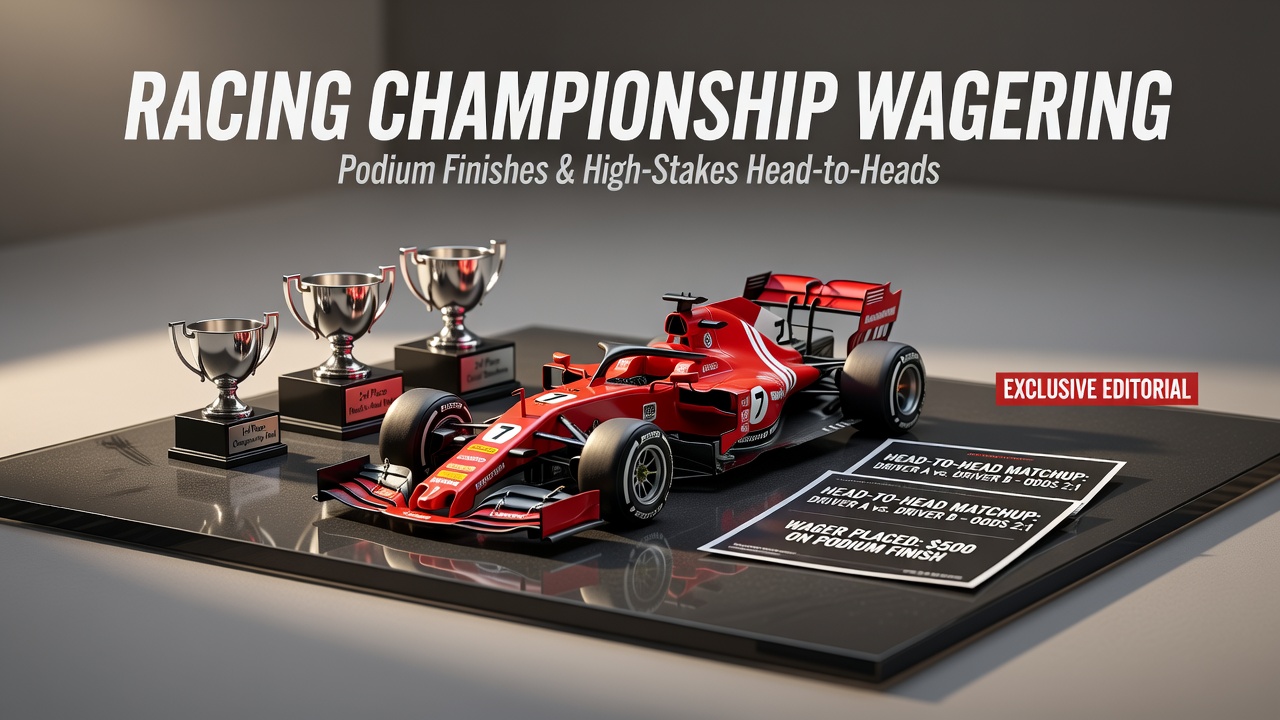
Winner betting is the simplest: Lewis Hamilton finishes first. The odds move based on qualifying position, weather, recent form, and team reliability. Someone betting Hamilton to win the Australian Grand Prix at 3-to-1 is making a judgment about his team's pace relative to the field, his ability to navigate the opening lap without incident, and the probability that the car will not suffer mechanical failure.
These are knowable things if you follow the sport closely. Not predictable, but informed. The expected value of betting on a championship favorite is negative (the house has already calculated it), but if you have genuine information that the rest of the betting market does not, you can beat that expectation.
Podium betting is lower odds (finish top three). Head-to-head betting is: Driver A finishes ahead of Driver B. This is where I found my edge. Two drivers, one race, clear outcome. No house shuffling. Just two athletes and their machines competing directly.
The Recovery Angle
I was drinking heavily for seven years. Then I got sober. Then, three months later, I started betting again, specifically on F1. I was trading one compulsion for another, and I could feel it happening in real time. The rush was not as intense as the drinking, which is why I could get away with it without complete relapse.
But here is what made F1 betting worth continuing: I could apply actual skill. I studied driver form, tyre strategies, team dynamics. I built a model. I tracked my results. After six months of serious betting, I realized I was actually beating the line on head-to-head matchups. Nothing dramatic (about two percent edge), but real.
The Strategy That Worked
I stopped betting on winners. Too much noise, too much luck. Instead, I found mismatches: situations where the market was slow to adjust to recent form, where a driver was undervalued relative to a teammate, where a car upgrade had not yet moved the odds.
For example: a driver switch to a new team. The market prices them based on their previous team's performance. The new team is often faster (or slower) than expected. The first race usually sees the markets adjust violently once the new car is on track. By the second race, the odds are usually accurate.
I bet on head-to-head matchups in that second or third race, after the market had adjusted to the new reality but before the betting public fully appreciated it.
The Cost
I won money. I actually did. Over two years, I made about eight thousand pounds from F1 betting. But the psychic cost of keeping the gambling habit alive, even with a small edge, was higher than I expected. I found myself researching the sport obsessively. I was checking odds constantly. The recovery was real, but it was not clean.
I quit betting in 2023. Not because I was losing (I was not), but because the habit was tying me back to the same dependency loop that nearly killed me. Formula 1 betting taught me something: you can have an edge and still need to walk away. The choice to gamble is not purely rational. It is emotional, psychological, chemical.
The right answer for me was to stop. The right answer for someone else might be different. But I cannot recommend F1 betting to people in early recovery without being honest about what it costs.