The gentleman from Mumbai was, naturally, a financier. He preferred baccarat. The screen of his telephone was not the Palazzo table he knew from his visits to Macau, but the device was his, and the dealer was present. The sightlines were adjusted for the small display. The angle was optimized for mobile viewing. The technology served elegance, not ostentation.
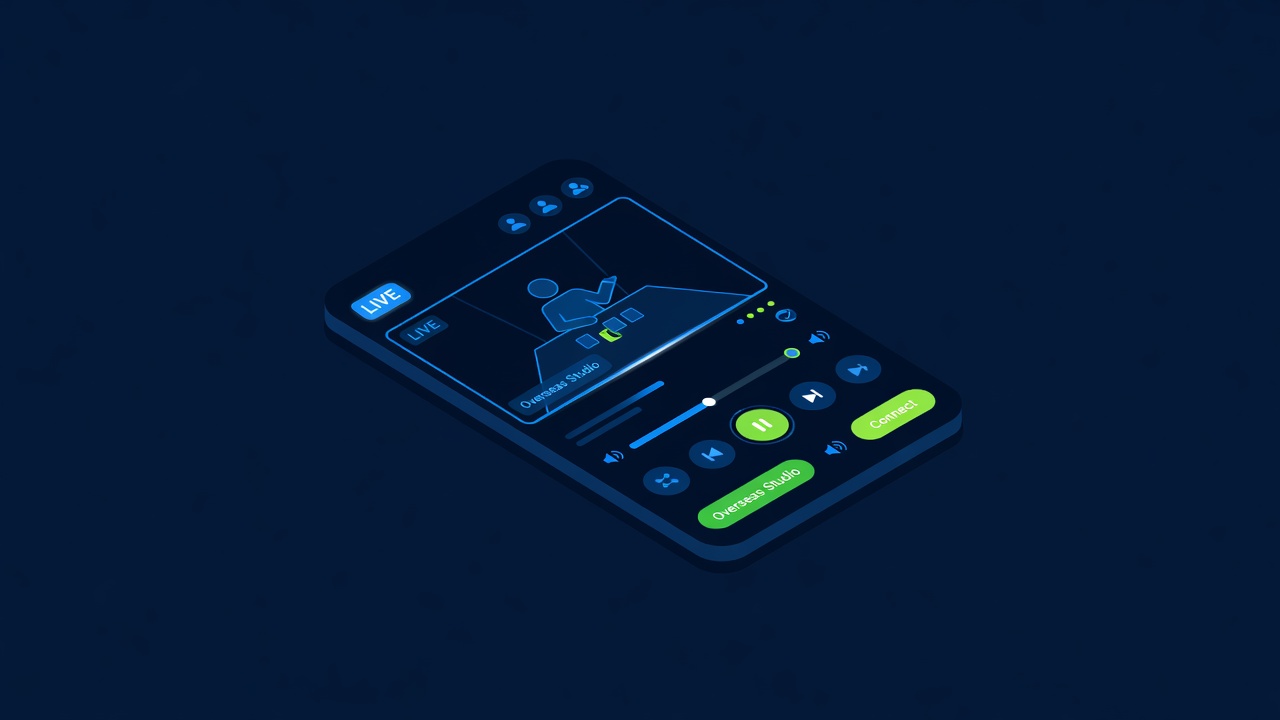
Mobile live dealer is a specialized infrastructure. A studio that produces live dealer games must now consider not just desktop viewing but also tablet and mobile phone viewing. This changes everything about how the studio is designed.
Traditional live dealer studios position cameras for desktop viewing. The table is centered on a large screen. The sightlines work. On a phone, these same sightlines become claustrophobic. The dealer's face fills the entire screen. The table disappears.
Mobile studios solve this by positioning cameras differently. A wider angle lens captures more of the table. The dealer is smaller on screen but the table context is visible. The image is compressed slightly but remains legible on a small display.
Lighting becomes critical on mobile. Shadows that are acceptable on a large screen become unreadable on a small screen. Mobile studios use more direct, more diffuse lighting. The image needs to compress well and still be legible when viewed in bright sunlight on a phone.
Audio becomes more important because video becomes less dominant. A phone speaker is small. The audio must be clear and directional. The dealer's voice must be intelligible even through poor earpieces.
The Technical Architecture
Mobile live dealer streams use adaptive bitrate technology. The stream quality adjusts based on available bandwidth. A player with good 5G gets high-quality video. A player with weak 3G gets lower quality but the stream continues.
The stream is also optimized for latency on mobile. Desktop viewers tolerate a one-second delay. Mobile users notice a two-second delay. Studios aim for sub-one-second latency on mobile by using specific codecs and protocols optimized for mobile networks.
UI elements are redesigned for touch. Buttons are larger. Touch targets are bigger. Swiping replaces clicking. The experience is fundamentally mobile-first, not desktop adapted.
Some studios now have dedicated mobile studios separate from desktop studios. The camera positions are different. The table setup is different. The dealers are trained differently. The goal is optimization for the majority of mobile players who will never see a desktop version.
Mobile live dealer is not a downgrade of desktop. It is a different product optimized for different constraints.
Evolution Gaming, the dominant live dealer operator, has invested heavily in mobile optimization. Their latest mobile experience compresses a full table into a phone screen without losing readability. This is an engineering achievement.
Pragmatic Play has taken a similar approach. Their mobile tables are designed specifically for phones. The experience is not the same as desktop but it is designed to be excellent for mobile.
Some players prefer mobile live dealer to desktop because the form factor is better for them. They are traveling. They are on breaks. They can play for fifteen minutes on their phone easily. Desktop requires being at a computer.
The economics of mobile change the user behavior. Mobile players play more frequently but in shorter sessions. Desktop players play longer but less frequently. Both behaviors generate similar revenue if the house edge is equivalent.
Some casinos have seen that mobile players are higher-value players because they play more frequently, even if sessions are shorter. Mobile players generate more volume. Volume compounds into profit over time.
The mobile studio infrastructure is expensive. Multiple camera angles. Mobile-optimized lighting. Mobile-optimized compression. Mobile-optimized UI. The studio costs more than a traditional studio. But the volume of players justifies the cost.
In the future, mobile will be the primary viewing method. Desktop will be secondary. Studios will be designed for mobile first. Desktop viewing will be the adapted version. This is where the industry is moving.