The pianist at the Desert Inn, the maitre d at the Sands who remembered Sinatra, the kind of insider detail that only mattered if you had lived a certain life in a certain era. That was how casinos operated before push notifications. They remembered you. They created intimacy. Now the intimacy is algorithmic.
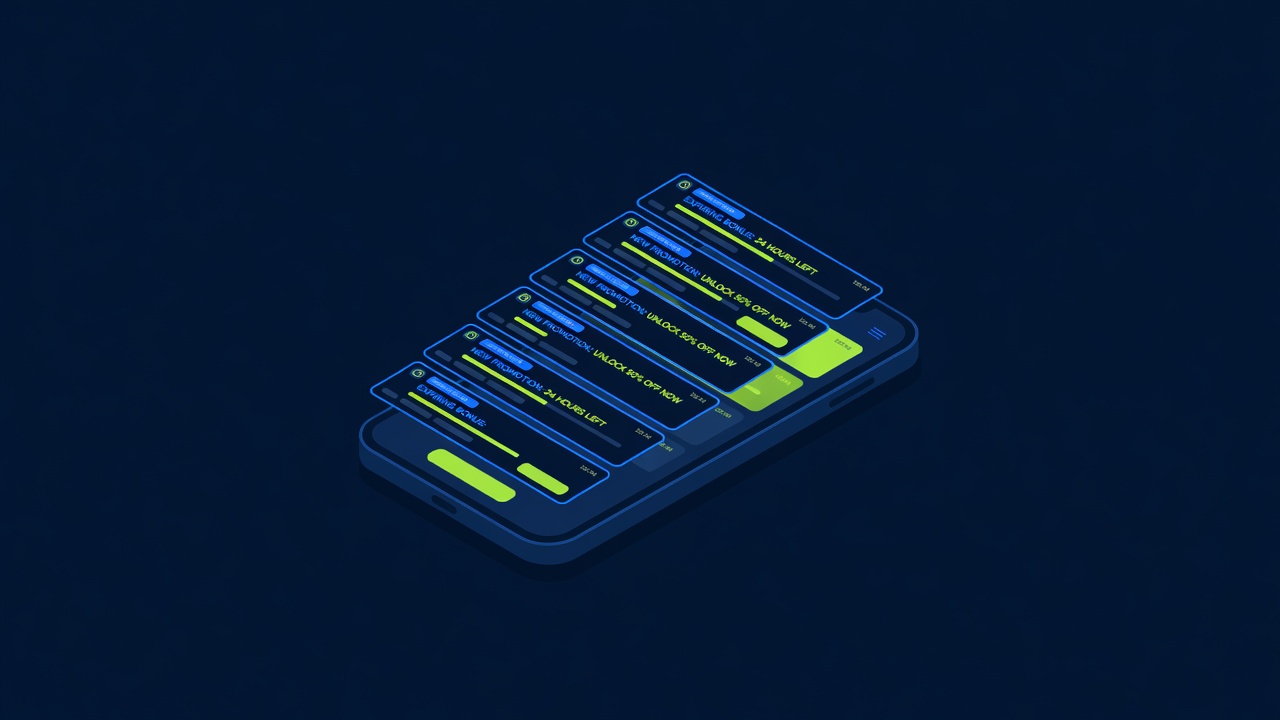
Mobile notifications are the casino's voice in your pocket. A promotion expiring in twelve hours. A bonus available to high-value players. A new slot game just launched. The notification is designed to arrive at the moment when you are most likely to click. Not random. Algorithmic. Calculated.
Casinos have spent millions building notification systems that predict your behavior. They know what time you are most likely to be playing. They send notifications then. They know what messages make you click. They send those messages. They know what bonuses you are most likely to claim. They offer those.
The notifications are not personalized because the casino loves you. The notifications are personalized because personalization increases engagement, and engagement increases revenue.
The Mechanics of Attention
A notification is an interruption. Your phone buzzes. You check it. The casino has captured a moment of your attention. In that moment, the casino wants you to install the app or open it and make a deposit.
Some casinos send notifications at night. Some at work hours. Some time them to arrive when you have just lost money, knowing that you are more likely to make a deposit to chase losses. The timing is not accidental. The casino knows when you are vulnerable.
Other casinos send notifications featuring countdown timers. "Bonus expires in 12 hours." "Promotion ends at midnight." The urgency is artificial. The bonus probably exists for multiple days. But the notification creates artificial scarcity. This drives immediate action.
Some notifications feature emojis and casual language. "Yo, we got new slots for you." This is an attempt to create false friendship. The casino is not your friend. The casino wants your money. But the casual tone might make you feel comfortable enough to click.
Other notifications are more formal. "Congratulations, you are eligible for a high roller bonus." This creates status. You are not just a player. You are a valued player. This flattery is designed to make you feel special and then extract money from you through the bonus.
A notification is a reminder that the casino is always watching and always calculating how to extract more engagement from you.
Responsible management of casino notifications means understanding what is happening. The notification is not informational. It is behavioral manipulation. It is designed to change your actions.
The simplest form of responsible management is to disable notifications. Remove the casino apps from your phone. Block notifications if you keep the apps. Remove the casino's voice from your pocket.
Some players disable all notifications except ones that they explicitly approve. They go into casino settings and opt in to notifications only about withdrawals or account changes. This limits the casino's ability to manipulate them.
Other players keep notifications enabled but set them to Do Not Disturb hours. The notifications arrive but do not interrupt you at night or work. This allows you to check them on your schedule rather than having the casino dictate the timing.
The sophisticated approach is to recognize that any notification is designed for the casino's benefit. Even notifications about bonuses expiring are not really about you missing out. They are about the casino inducing urgency. Understanding this allows you to recognize manipulation when it occurs.
Many casinos offer to send fewer notifications if you ask. You can often contact customer service and request that notification frequency be reduced. This gives you control. Most players do not ask because they do not realize the notifications are manipulative.
For people with gambling problems, notification management is critical. Notifications trigger cravings. They create opportunities for impulsive play. Disabling notifications removes these triggers. This is a concrete step toward responsible play.
For casual players, notification management is about maintaining control. The casino wants your attention. You want to maintain boundaries. Controlling notifications helps you maintain those boundaries.