A license is a floor, not a ceiling. Verifying one takes about two minutes.
That sentence is the short answer. The longer answer, which is what concerns us in a field where folklore often masquerades as due diligence, is that licensing reflects three things at once: the regulator's authority over the operator, the operator's obligations to players, and the procedural recourse available when those obligations are breached. Each of these is measurable. Each of these can be checked by a player who knows where to look.
What a gambling license actually is
A gambling license is a legal authorization issued by a jurisdiction's regulator that permits an operator to offer specified games to specified markets under specified terms. Regulator, in this context, is typically a governmental or quasi-governmental body with statutory enforcement power. The United Kingdom Gambling Commission (UKGC), the Malta Gaming Authority (MGA), the Alderney Gambling Control Commission (AGCC), the Isle of Man Gambling Supervision Commission, the New Jersey Division of Gaming Enforcement (DGE), and the Kahnawake Gaming Commission are common examples. Each sets rules on game fairness, player fund segregation, advertising standards, and responsible gambling protocols.
A license is not a guarantee that a player will be treated well. It is, however, a guarantee that there exists an external authority to whom the player can appeal if the operator breaks the rules. That distinction matters.
The three-step verification procedure
There are three steps, in order, and each one rules out a specific failure mode.
Step one: locate the license claim on the casino's own pages. A legitimately licensed operator will display the license number, the issuing jurisdiction, and usually a clickable seal, in the footer of every page. The information is commonly paired with the corporate entity that holds the license, which may not be the same as the casino brand. Note both the license number and the entity name. If no such information exists, stop. You are not looking at a licensed operator.
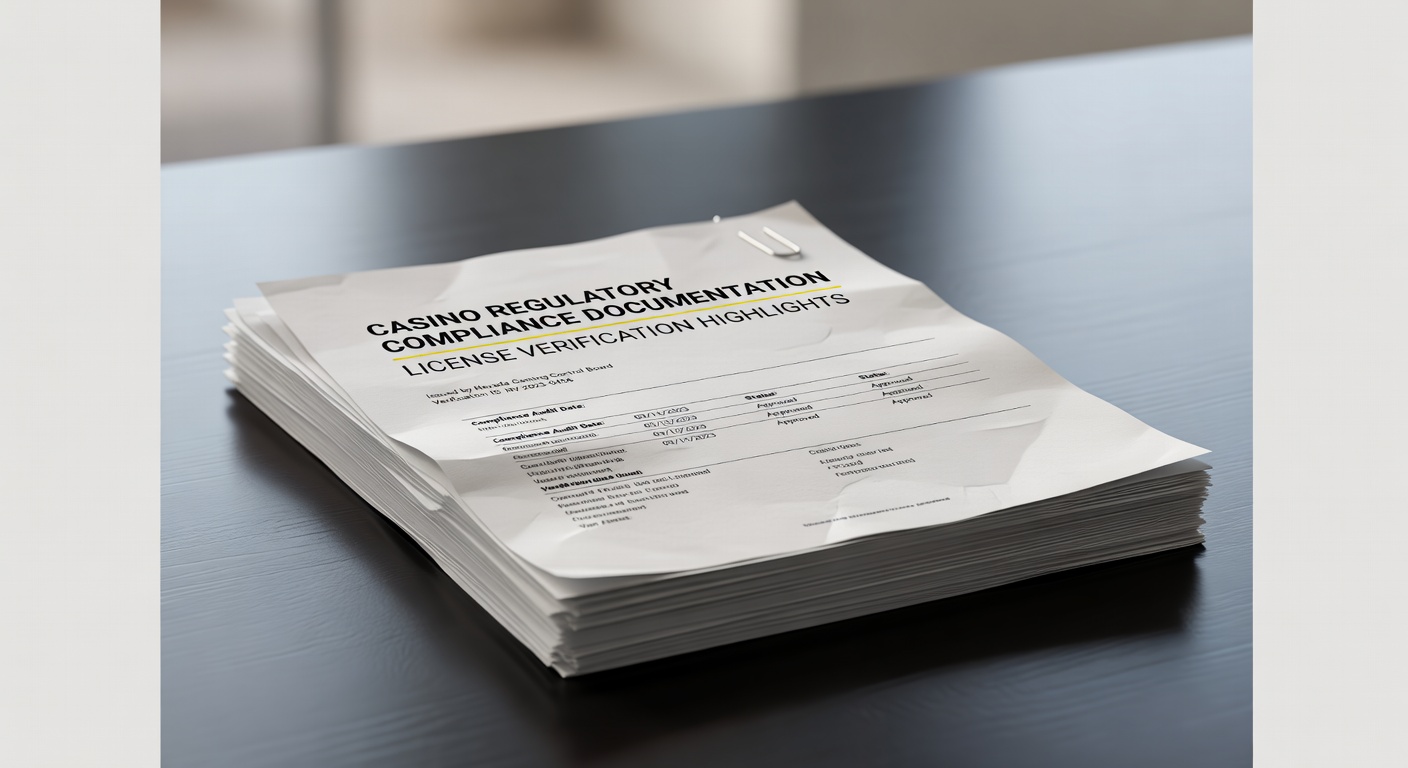
Step two: verify the license on the regulator's official website. This is the step most players skip. The UKGC maintains a public register at gamblingcommission.gov.uk where any license number can be searched. The MGA's authorisations page works the same way. The Isle of Man publishes a list of licensees. You enter the license number or company name and confirm that the license is active, covers the games on offer, and is granted to the entity the casino claimed. An expired, suspended, or mismatched license is a signal as strong as no license at all.
Step three: check the regulator for any recent enforcement actions against the operator. Regulators publish fines, warnings, and license revocations. Two UKGC fines in the past eighteen months for social responsibility failings is a materially different risk profile than a clean record, even if the license itself is current.
A concrete example
Suppose a casino brand lists "Licensed by the MGA, MGA/B2C/123/2015" in its footer. The verification looks like this. Open the MGA's authorisations portal. Enter 123/2015. Confirm the operator entity name matches the corporate identity on the casino's Terms and Conditions (often different from the consumer brand). Confirm the license class authorizes the products offered: Type 1 covers RNG casino games, Type 2 covers sportsbook, Type 3 covers peer-to-peer including poker, Type 4 covers controlled skill games. A mismatch, for instance a Type 2 license advertising live blackjack, is a red flag regardless of what the footer claims.
Jurisdictional red flags
Not all licenses are equivalent. Some jurisdictions have rigorous application processes, active ongoing supervision, and meaningful enforcement. Others sell letterhead. The operational question is whether the regulator has the power and the will to act against a noncompliant operator.
- Strong oversight, evidence of enforcement: UKGC, MGA, Gibraltar, Isle of Man, New Jersey DGE, Pennsylvania Gaming Control Board.
- Moderate oversight, variable enforcement: Kahnawake, AGCC, various Canadian provincial regimes.
- Weak oversight or credibility concerns: Curacao eGaming (historically a single master-license structure with limited dispute resolution), Costa Rica (no true gaming license exists; operators hold generic business permits), Anjouan, and several offshore letter-box jurisdictions.
A Curacao-licensed casino is not necessarily fraudulent. It is, however, a casino where the external recourse mechanism is substantially weaker than a UKGC-licensed peer. Adjust accordingly.
Beyond the license: the signals that licensing does not capture
Licensing addresses legality. It does not fully address usability. Independent audits of the random number generator, typically by eCOGRA, iTech Labs, or GLI, provide a separate layer of verification on game fairness. A transparent Terms and Conditions document, a published payout speed policy, a visible and unpaywalled self-exclusion pathway, and a responsive customer support channel are features that correlate with operator quality but do not appear in the license itself. A player interested in the full picture will check both.
A brief note on player wellbeing
The psychological research on gambling harm is clear on one point: harm is disproportionately concentrated in environments where the player has no recourse. Unregulated operators, offshore shells, and sites operating outside any licensing regime increase that risk substantially, because the behavioral mechanisms that can lead to harm, variable-ratio reinforcement, near-miss effects, and chasing behaviors, are amplified when the operator is not bound to intervene. A license, imperfect though it is, inserts a third party into that loop. That is the single most important reason to verify one.